

Aaj internet par almost har kaam online ho gaya hai—banking, shopping, bill payments, ticket booking, social media aur important documents tak. Lekin internet ki convenience ke saath cyber fraud ka risk bhi badh gaya hai.
Inhi online frauds mein ek bahut common technique hai Phishing Scam.
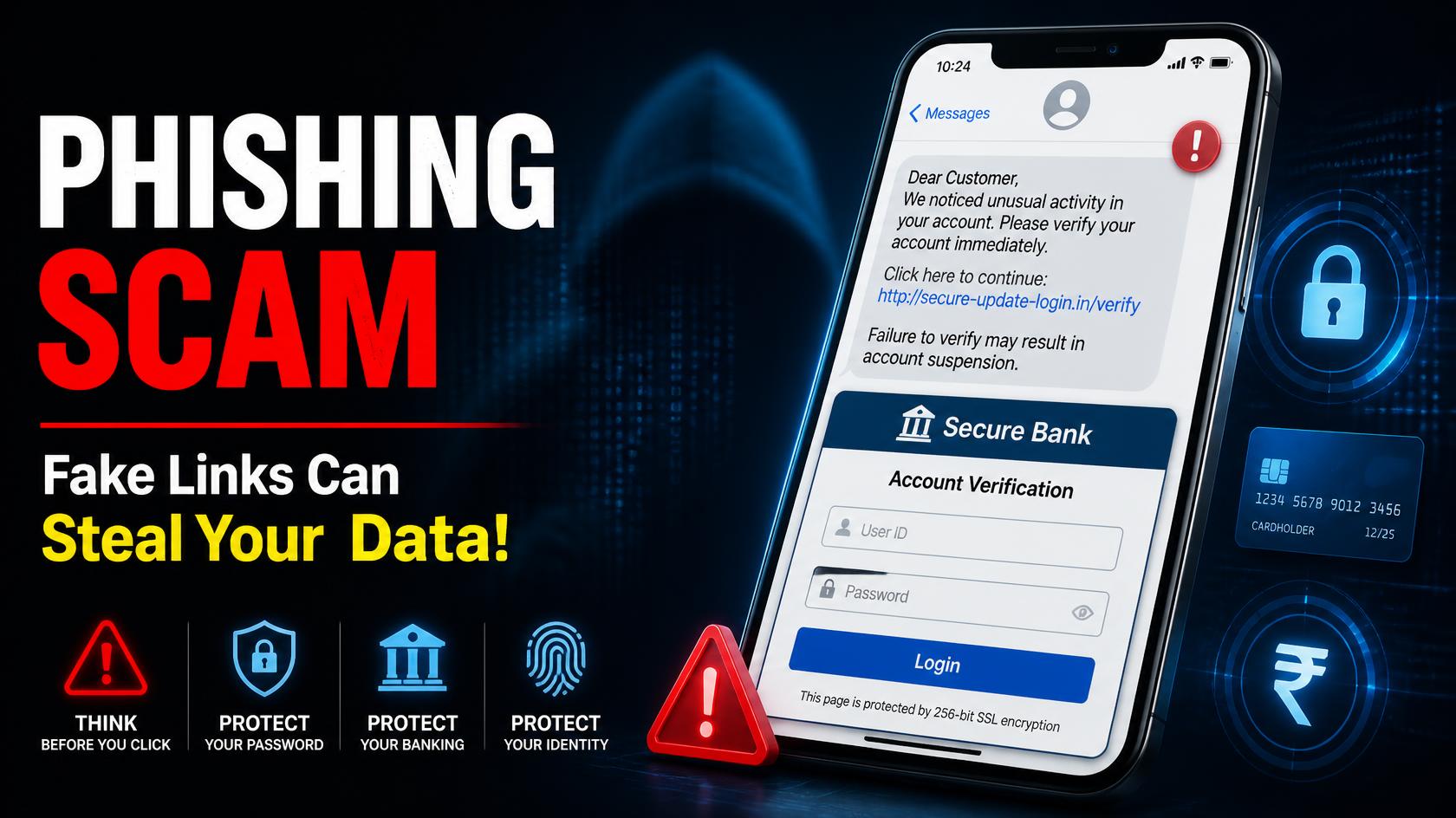
Phishing scam mein fraudsters fake emails, SMS, WhatsApp messages, social media DMs ya websites ke through users ko malicious ya fake links par click karne ke liye convince karte hain. Ye links aksar genuine websites jaise dikhne wale pages par le jaate hain, jahan victim se username, password, OTP, card details, banking information ya other personal information enter karne ke liye kaha ja sakta hai.
Scammer ka goal simple hota hai: aapko fake information dekar khud hi sensitive information enter karwane par majboor karna.
Isliye phishing se bachne ke liye sirf antivirus hona enough nahi hai. Link par click karne se pehle sochna aur website verify karna equally important hai.
🎣 What Is a Phishing Scam?
Phishing ek cyber fraud technique hai jisme scammers kisi trusted organization, company, bank, shopping website ya service provider ka naam lekar victim ko deceive karte hain.
For example, aapko ek message mil sakta hai:
“Your bank account will be blocked today. Verify your account immediately.”
Message mein ek link diya hota hai.
Victim link par click karta hai aur ek website open hoti hai jo bank ki official website jaisi दिखाई दे सकती है. Victim login details enter karta hai, lekin information actually scammer ke paas chali ja sakti hai.
Isi technique ko phishing kaha jata hai.
🔗 How Does a Phishing Scam Work?
Phishing attack generally kuch common steps follow karta hai.
1. Fake Message Send Kiya Jata Hai
Scammer email, SMS, WhatsApp, Telegram, social media ya phone call ke through victim ko contact karta hai.
Message mein usually ek urgent problem ya attractive offer mention hota hai.
Examples:
- Your bank account needs verification.
- Your KYC has expired.
- Your parcel is waiting for delivery.
- Your account will be suspended.
- You have won a reward.
- Your payment has failed.
- Your electricity connection will be disconnected.
- Your subscription is about to expire.
2. Victim Ko Urgency Feel Karayi Jati Hai
Phishing messages mein urgency ka use bahut common hai.
Scammer chahta hai ki victim bina properly check kiye link par click kar de.
Examples:
“Act within 30 minutes.”
“Your account will be blocked today.”
“Last warning.”
“Click now to avoid cancellation.”
Jab user panic mein hota hai, to woh message ko verify karne ke bajay directly link open kar sakta hai.
3. Fake Website Open Hoti Hai
Link click karne ke baad victim ek fake website par pahunch sakta hai.
Website ka design original website jaisa ho sakta hai:
- Same-looking logo
- Similar colors
- Login page
- Customer support information
- Fake security badges
- Similar-looking domain name
Isliye sirf website ka appearance dekhkar usse genuine nahi maana chahiye.
4. Sensitive Information Maangi Jati Hai
Fake website victim se information enter karne ke liye keh sakti hai.
For example:
- Username
- Password
- Mobile number
- Card number
- CVV
- OTP
- Banking details
- Personal information
Victim ko lagta hai ki woh genuine website par details submit kar raha hai.
5. Information Scammer Tak Pahunch Sakti Hai
Fake form mein enter ki gayi information scammers ke control mein ja sakti hai.
Is information ka misuse account takeover, financial fraud, identity theft ya further scams ke liye kiya ja sakta hai.
📱 Common Types of Phishing Scams
Phishing sirf email tak limited nahi hai.
📧 Email Phishing
Fake emails kisi bank, company, delivery service, social media platform ya online service ke naam se bheje ja sakte hain.
Email mein suspicious attachment ya link ho sakta hai.
📱 SMS Phishing — Smishing
SMS ke through phishing ko commonly smishing kaha jata hai.
Example:
“Your package could not be delivered. Update your address here.”
Message ke saath suspicious link diya ja sakta hai.
💬 WhatsApp Phishing
Scammers WhatsApp par fake customer-care messages, job offers, prize notifications, KYC alerts ya account warnings send kar sakte hain.
📲 Social Media Phishing
Instagram, Facebook aur other platforms par fake login pages ya suspicious links share kiye ja sakte hain.
Scammer hacked ya fake account se message bhej sakta hai.
☎️ Voice Phishing — Vishing
Vishing mein scammer phone call karke victim ko convince karta hai.
Caller khud ko bank employee, customer-care executive ya government representative bata sakta hai.
Victim ko fake link par click karne ya confidential information share karne ke liye kaha ja sakta hai.
🚨 How to Identify a Phishing Link?
Phishing links ko identify karna kabhi-kabhi difficult ho sakta hai, lekin kuch warning signs help kar sakte hain.
🔍 Check the Website Address
Link open karne se pehle URL carefully check karein.
Scammers legitimate website ke naam mein small spelling changes kar sakte hain.
For example, fake domain original domain ke similar dikh sakta hai.
Spelling aur domain name ko carefully verify karein.
⚠️ Don’t Trust “HTTPS” Alone
HTTPS aur padlock icon connection security ka indication ho sakte hain, lekin iska matlab ye nahi ki website automatically legitimate hai.
Scammers bhi HTTPS-enabled websites use kar sakte hain.
Domain name ko independently verify karna zaroori hai.
🚨 Unexpected Urgency
Agar message aapko immediately action lene ke liye force kar raha hai, to extra caution rakhein.
🎁 Too-Good-To-Be-True Offers
“Free gift”, “instant cashback”, “huge discount”, “guaranteed reward” ya unexpected prize ke links suspicious ho sakte hain.
🔐 Login Details Maangna
Agar message ke link se open hui website suddenly password, OTP, card details ya banking information maangti hai, to page close karke official website/app independently open karein.
🏦 Phishing and Banking Fraud
Phishing scams financial fraud ke liye particularly dangerous ho sakte hain.
A scammer fake bank message bhej sakta hai:
“Your account will be suspended due to incomplete KYC.”
Victim link par click karta hai aur fake banking page open ho jata hai.
Page par login details enter karne ke baad scammer victim ko OTP share karne ke liye bhi trick kar sakta hai.
Isliye:
Unknown links + banking information = Stop and Verify.
Banking-related message receive hone par message ke link se website open karne ke bajay bank ki official app ya website independently open karna safer approach hai.
🛡️ How to Protect Yourself from Phishing Scams
1. Unknown Links Par Click Na Karein
Agar message unexpected hai, to link par click karne se pehle sender aur information verify karein.
2. Official App or Website Directly Open Karein
Banking, shopping, email aur social media accounts ke liye message mein aaye link ki jagah official app ya manually verified website use karein.
3. OTP, PIN and Password Share Na Karein
OTP, UPI PIN, ATM PIN, CVV aur passwords confidential information hain.
Unknown callers ya websites ke saath share na karein.
4. Password Reuse Avoid Karein
Different important accounts ke liye unique passwords use karna better security practice hai.
Agar ek password compromise ho jata hai, to multiple accounts automatically vulnerable nahi honge.
5. Two-Factor Authentication Enable Karein
Important email, social media aur other online accounts par multi-factor authentication (MFA) available ho to enable karein.
6. Browser Warnings Ko Ignore Na Karein
Agar browser suspicious website ke baare mein warning show karta hai, to warning ko bypass karke website open karne se bachein.
7. Software Updated Rakhein
Operating system, browser aur security software ko updated rakhna useful security practice hai.
🧠 What If You Clicked a Phishing Link?
Agar aapne accidentally suspicious link click kar diya hai, to panic na karein.
Agar Sirf Link Open Kiya Hai
Agar aapne link open kiya lekin koi information enter nahi ki aur kuch download/install nahi kiya, to page close karein aur device/security software ko check karein.
Agar Password Enter Kiya Hai
Immediately official website/app se password change karein.
Agar same password kisi aur account mein use kiya hai, to wahan bhi password change karein.
Agar Banking Information Share Hui Hai
Bank ko immediately contact karein aur suspicious transaction/activity monitor karein.
Agar financial fraud ho gaya hai, to India mein 1930 cyber-fraud helpline ke through report karne par consider karein.
Agar OTP Share Kiya Hai
Immediately bank/payment provider se contact karein aur account/transactions secure karne ke steps follow karein.
📊 Phishing Scam vs Genuine Message
| Phishing Scam | Genuine Communication |
|---|---|
| Unexpected message | Expected communication |
| Urgent action pressure | Clear information |
| Suspicious link | Independently verified official channel |
| Fake login page | Official app/website |
| Sensitive details requested unexpectedly | Appropriate authentication process |
| Spelling/domain inconsistencies | Correct official domain |
| “Account will be blocked” threats | Verifiable account notifications |
❌ Common Mistakes People Make
Phishing scams successful hone ka ek reason human error bhi hai.
Common mistakes include:
- Message ko bina padhe link click karna
- Sender name dekhkar trust kar lena
- URL check na karna
- Same password multiple accounts mein use karna
- OTP share karna
- Fake customer-care number par call karna
- Urgent messages se panic ho jana
- Unknown attachments download karna
Ek simple habit in risks ko significantly reduce kar sakti hai:
STOP → CHECK → VERIFY → THEN ACT
🔎 Final Takeaway
Phishing scam mein scammers technology ke saath-saath human psychology ka bhi use karte hain.
Kabhi fear create kiya jata hai:
“Your account will be blocked.”
Kabhi excitement:
“Congratulations! You won a reward.”
Aur kabhi urgency:
“Click now to avoid cancellation.”
In sab situations mein ek common rule follow karein:
Message ke link par blindly trust na karein.
Official app ya website independently open karein, URL carefully check karein aur OTP, PIN, password ya banking information unknown sources ke saath share na karein.
Agar koi online message aapko jaldi mein decision lene par force kar raha hai, to pause karna hi sabse smart decision ho sakta hai.
🛡️ Remember:
Think Before You Click.
Ek single suspicious link aapke important accounts aur financial information ko risk mein daal sakta hai. Awareness aur verification phishing scams ke against aapki sabse strong protection hain.