


Introduction
Artificial Intelligence has transformed the way we work, create, and communicate. From writing blog posts and designing graphics to generating videos and composing music, AI tools have become more capable than ever. In 2026, businesses, freelancers, and creators rely on AI to boost productivity and complete tasks faster.
But despite these remarkable advancements, one important question remains:
Can AI truly replace human creativity?
The answer is more nuanced than a simple yes or no. AI can generate ideas, automate repetitive work, and assist with creative tasks, but there are still many aspects of creativity that depend on human emotions, experiences, intuition, and original thinking.
In this article, we’ll compare AI and human creativity, explore what AI does exceptionally well, and discuss the creative abilities that remain uniquely human in 2026.
Understanding AI Creativity
AI doesn’t create in the same way humans do. Instead, it analyzes massive amounts of existing data, identifies patterns, and generates content based on what it has learned.
Whether it’s writing an article, creating digital artwork, or suggesting marketing ideas, AI predicts what is most likely to fit the prompt it receives.
This makes AI an incredibly powerful assistant—but not an independent creative thinker.
Where AI Excels
AI has become an invaluable tool for creators because it can complete repetitive and time-consuming tasks within seconds.
AI is excellent at:
- Writing first drafts
- Brainstorming ideas
- Creating marketing copy
- Editing images
- Generating design concepts
- Translating languages
- Summarizing research
- Automating repetitive workflows
These capabilities allow professionals to spend less time on routine work and more time refining their ideas.
What Human Creativity Still Does Better
Although AI is impressive, there are several creative strengths that remain difficult to replicate.
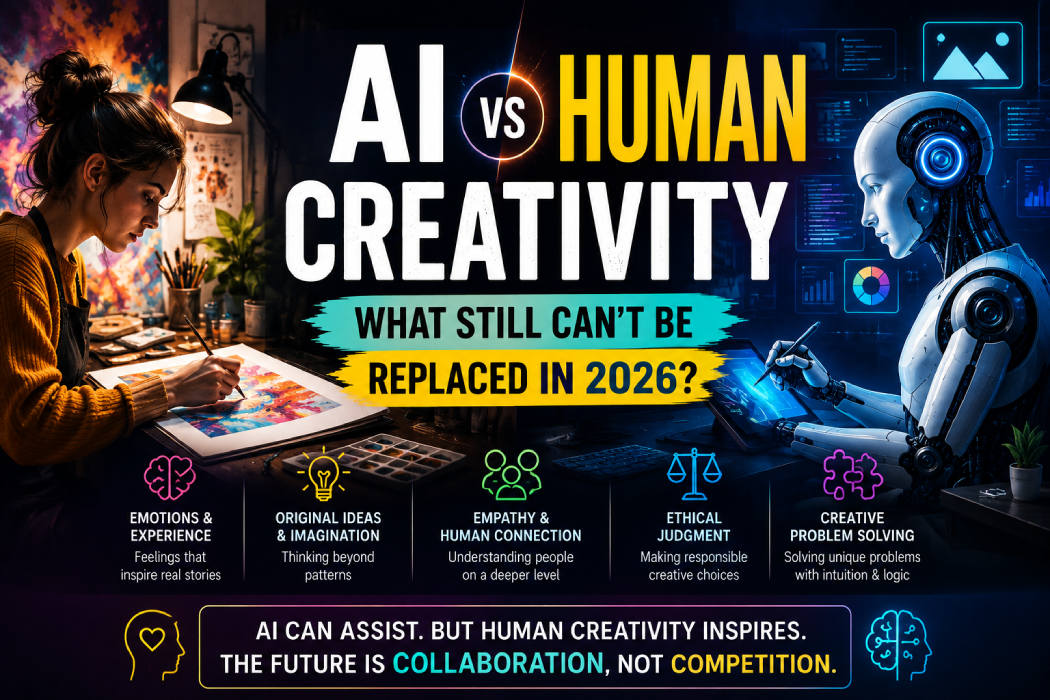
1. Emotional Storytelling
The most memorable stories connect with people through genuine emotion.
Human writers, filmmakers, musicians, and artists draw inspiration from personal experiences, relationships, successes, failures, and cultural backgrounds.
AI can imitate emotional language, but it doesn’t experience joy, grief, love, or hope. Those lived experiences often shape the stories that resonate most deeply.
2. Original Ideas and Vision
AI generates content by recognizing patterns in existing information.
Humans, however, can challenge assumptions, imagine entirely new concepts, and take creative risks that don’t follow established patterns.
Many groundbreaking inventions, artistic movements, and iconic brands began with bold ideas that didn’t fit conventional thinking.
3. Empathy and Human Connection
Successful marketing, education, and entertainment often rely on understanding how people feel.
Human creators naturally recognize emotions, cultural context, humor, and subtle communication in ways that AI still struggles to interpret consistently.
Empathy remains one of the most valuable creative skills.
4. Ethical Decision-Making
Creative work often involves ethical choices.
Should a campaign use a controversial topic?
Will a design unintentionally offend a particular audience?
Can a story influence public opinion responsibly?
Humans consider these questions using judgment, experience, and values, while AI can only assist based on patterns and guidance.
5. Creative Problem Solving
Real-world challenges rarely have perfect answers.
Human creativity combines logic, intuition, collaboration, and experience to solve unique problems.
AI can suggest options, but humans decide which solution best fits the situation.
Where Humans and AI Work Best Together
Rather than competing, AI and humans often produce the best results when working together.
A typical workflow might look like this:
- AI generates ideas.
- Humans select the strongest concepts.
- AI creates a first draft.
- Humans refine the tone and storytelling.
- AI checks grammar and formatting.
- Humans publish the final version.
This collaboration saves time while preserving originality and authenticity.
Industries Using AI Creatively
AI is transforming creative work across many industries.
Content Creation
Bloggers use AI for outlines, research, and editing while adding their own expertise and voice.
Graphic Design
Designers generate concepts quickly with AI before refining colors, branding, and visual identity.
Video Production
Creators use AI for subtitles, voiceovers, editing, and scripting while maintaining creative direction.
Marketing
Businesses automate campaigns, personalize content, and analyze customer behavior while relying on marketers for strategy and brand positioning.
Education
Teachers use AI to create learning materials while adapting lessons to the needs of individual students.
Can AI Replace Creative Jobs?
AI is changing creative jobs, but it is not eliminating the need for creative professionals.
Instead, many roles are evolving.
Modern employers increasingly value people who know how to combine AI tools with critical thinking, communication, and creativity.
Those who learn to work alongside AI are likely to remain highly competitive in the job market.
Tips for Using AI Without Losing Creativity
To get the best results:
- Use AI to generate ideas, not final masterpieces.
- Add your own experiences and opinions.
- Edit AI-generated content carefully.
- Maintain your unique writing style.
- Verify facts before publishing.
- Focus on solving real problems for your audience.
Remember, AI can improve efficiency, but your personal perspective is what makes your work memorable.
The Future of Creativity
As AI continues to improve, it will become an even more powerful creative partner.
Future AI systems may offer better personalization, faster collaboration, and more advanced multimedia generation.
However, qualities such as imagination, emotional intelligence, ethical judgment, curiosity, and authentic storytelling will continue to make human creators indispensable.
The future isn’t about humans versus AI—it’s about humans using AI to create better work than either could produce alone.
Final Thoughts
Artificial Intelligence has revolutionized creativity in 2026, making content creation faster, more efficient, and more accessible than ever before. Yet, the heart of creativity remains deeply human.
AI can generate text, images, music, and ideas, but it cannot truly experience life, emotions, relationships, or personal growth. Those experiences shape the originality, empathy, and meaning behind great creative work.
The creators who thrive in the years ahead will be those who embrace AI as a powerful assistant while continuing to contribute the imagination, emotion, and unique perspective that only humans can provide.
Frequently Asked Questions
Can AI be truly creative?
AI can generate creative-looking content by learning patterns from existing data, but it does not possess imagination or personal experiences like humans.
Will AI replace writers and designers?
AI is more likely to assist professionals than replace them entirely. Human creativity and decision-making remain essential.
What is AI best at?
AI excels at automation, research, drafting, editing, data analysis, and repetitive creative tasks.
Why is human creativity still important?
Human creativity brings emotion, empathy, originality, ethics, and cultural understanding that AI cannot genuinely experience.
Should creators use AI?
Yes. AI can significantly improve productivity, but combining it with human insight leads to the best results.